
EV Power Stations
in Portland, OR
EV power stations in Portland, OR require more than charging equipment. They depend on properly engineered foundations, structural framing, weather protection systems, and coordinated installation to support long-term operation. Enviro Building Systems, LLC provides structural construction and installation services for EV charging station infrastructure across commercial, industrial, and municipal properties in the Portland area.
As electric vehicle adoption continues to expand across Oregon, charging infrastructure must be designed with durability, safety, and code compliance in mind. Portland’s climate, site conditions, and seismic requirements influence how EV charging structures are planned and constructed. From steel canopies to equipment pads and protective enclosures, every component must be integrated precisely.
Structural Steel Canopies for EV Charging Sites
Steel canopy systems are a common feature in EV power station construction. These structures protect charging equipment and vehicles from environmental exposure while supporting lighting and electrical conduit systems.
Steel Framing Systems
Structural steel framing provides strength and open-span capability, allowing multiple charging bays to be covered under a single canopy. Columns and beams are engineered to withstand wind loads and seismic forces in Portland, OR.
Roof Panel Integration
Metal roof panels are installed with proper slope and drainage detailing to manage rainfall. In Portland’s wet seasons, effective water runoff design is essential to prevent pooling and protect electrical equipment.
Integrated Conduit and Lighting Support
Steel canopy structures are engineered to accommodate conduit routing, lighting fixtures, and monitoring systems. Coordination between structural and electrical planning ensures safe and efficient installation.
Proper canopy design enhances site durability while maintaining structural integrity.
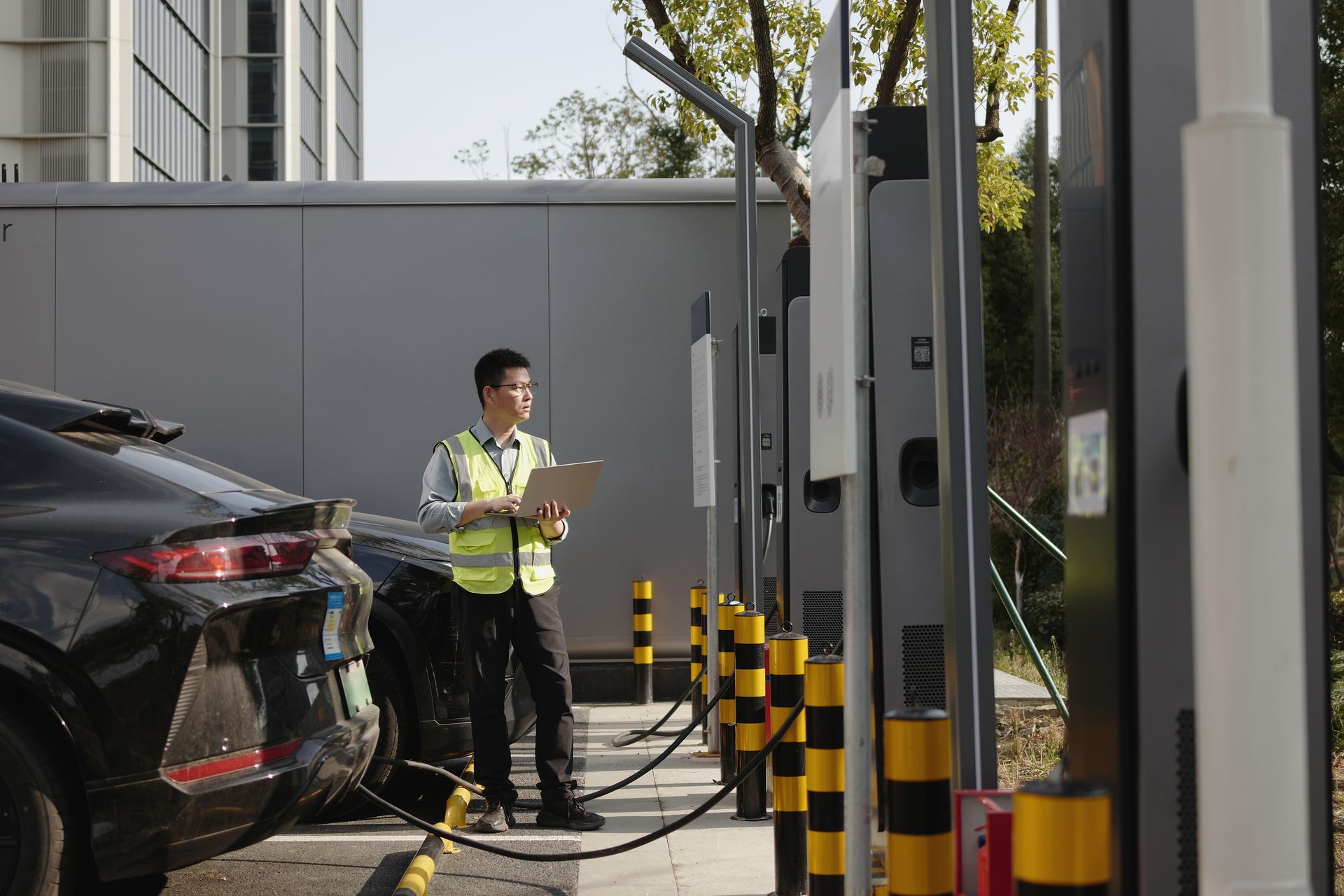
Concrete Foundations and Equipment Pads
EV charging equipment must be anchored to stable, reinforced foundations. Foundation installation is a critical phase in EV power station development.
Reinforced Concrete Pads
Charging units are mounted to concrete pads designed according to equipment specifications and soil conditions. Reinforcement is installed to handle equipment loads and prevent cracking over time.
Anchor Bolt Alignment
Precise anchor placement ensures that charging stations align correctly with electrical connections and structural supports. Accuracy during this phase supports safe operation and streamlined installation.
Drainage and Site Grading
Proper grading prevents water accumulation around equipment bases. Portland’s rainfall requires drainage systems that protect electrical infrastructure from prolonged moisture exposure.
Foundation precision directly impacts the long-term reliability of EV charging systems.

Structural Coordination with Electrical Infrastructure
While licensed electrical contractors handle power connections, structural construction must align with electrical layout plans. Coordination ensures that conduits, service panels, and charging units integrate seamlessly with steel and concrete components.
Equipment Enclosures and Protective Barriers
Steel bollards and protective framing may be installed around charging stations to guard against vehicle impact. These structural components are engineered for durability and compliance with safety standards.
Utility Integration
Structural elements must allow for underground conduit routing and utility access points. Careful planning reduces the need for rework during installation.
Code Compliance and Inspection Readiness
EV power station structures in Portland must meet Oregon building codes and municipal requirements. Structural components are installed according to approved plans to support final inspection and operational approval.
Integrated coordination minimizes construction conflicts and supports timely project completion.
Seismic and Environmental Considerations in Portland, OR
Portland’s seismic zone classification requires structural systems designed to resist lateral forces. Steel canopy frames and equipment foundations are engineered with bracing and anchoring methods that meet local code standards.
Environmental durability is equally important. Steel components are coated to resist corrosion in damp conditions. Roof and structural connections are sealed to prevent water infiltration. Long-term exposure to moisture and temperature changes is considered during material selection and installation.
Proper environmental detailing ensures that EV power stations remain structurally sound and operational throughout the year.
Applications for Commercial and Public Infrastructure
EV power stations in Portland, OR are installed across various property types, each with unique structural considerations.
Commercial Properties and Retail Centers
Retail locations often require multiple charging bays under a unified canopy. Structural layouts are designed to accommodate vehicle circulation patterns and accessible parking requirements.
Industrial and Fleet Charging Sites
Fleet operations may require reinforced pads and expanded canopy systems to support high-usage charging equipment. Structural components are engineered for durability under repeated operational demands.
Municipal and Public Installations
Public charging stations must align with city planning standards and accessibility codes. Structural installation supports long-term infrastructure reliability.
Contact Us
Enviro Building Systems, LLC provides structural construction services for EV power stations in Portland, OR, including steel canopy erection, foundation installation, and integrated site coordination. Through precise engineering and climate-responsive construction methods, EV charging sites are built to support expanding electric vehicle infrastructure across the region.
As demand for EV infrastructure continues to grow, properly engineered structural systems form the backbone of reliable and durable charging station development in Portland.